
Rats in Commander
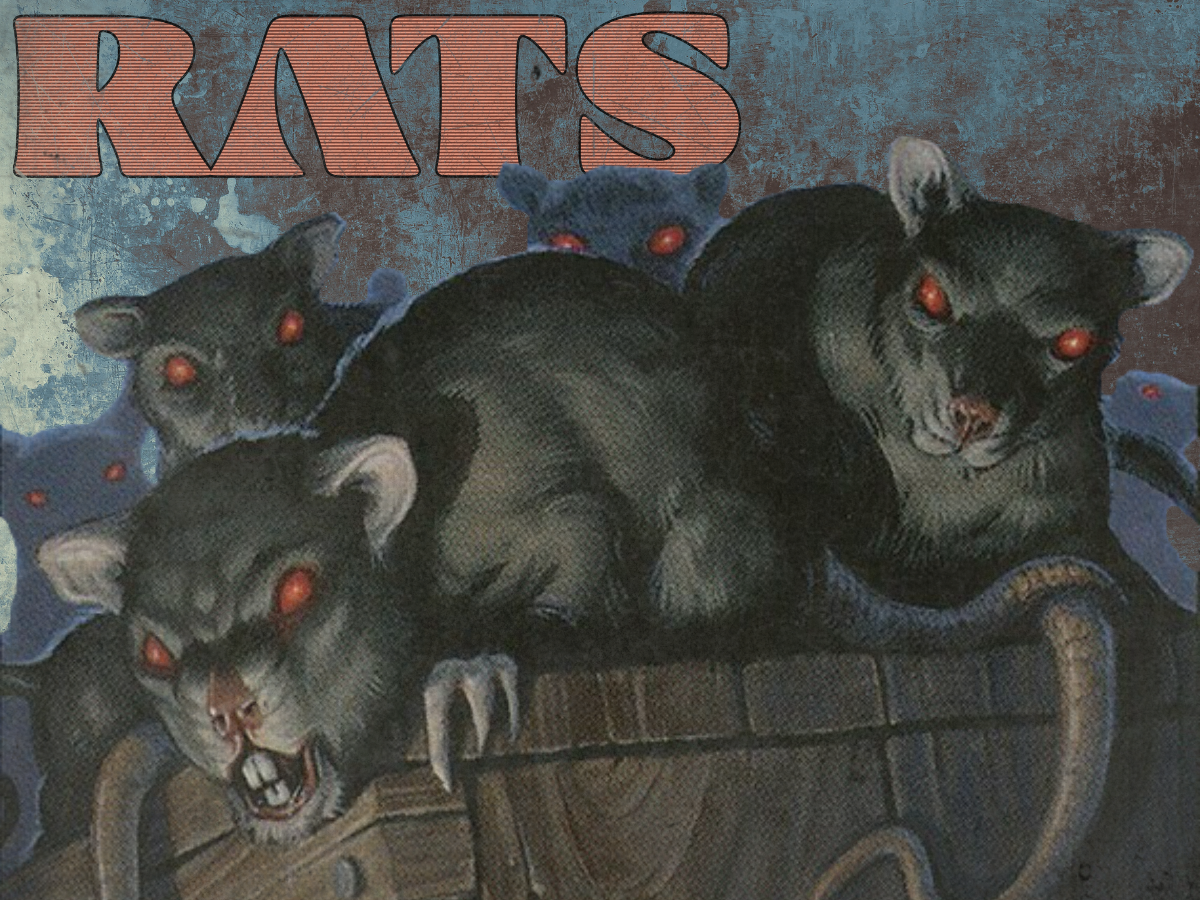
Crypt RatsCrypt Rats | Art by Matt Cavotta
Rats are everywhere across Magic's multiverse, fiction, and, naturally, the real world. Harbingers of death and disease, filth and squalor, they elicit a strong reaction from just about anyone who sees one.
So how do they play in Commander? What are the strengths and weaknesses of Rats? And how do you win with Rats, of all things?
This EDHREC Guide is here to answer all of these questions.
What Are Rats?
The first creature to be part of the Rat creature type was Plague RatsPlague Rats back in Alpha, the very first set of the game.
For some time, they were extremely two-note. They often fell into the archetype of being cheap, disposable creatures that had an incremental effect that scaled based on how many Rats you controlled or had some single-triggered ability. During this time, Rats were overwhelmingly -aligned with some splashing into a secondary color such as .
This was consistent across sets, planes, and different stages of Magic's history until a few notable exceptions.
Two of the most notable Rats printed were Relentless RatsRelentless Rats and Rat ColonyRat Colony, both of which scaled off of how many you had on the battlefield at a time and explicitly allowed you to include as many as you'd like in your deck. This overwrites the singleton rule of Commander, allowing decks to consist of nothing but Swamps, dozens of copies of one or both of these Rats, and a commander to support them.
Kamigawa introduced the Nezumi, a group of Rat humanoids which have since been expanded upon in other sets exploring that plane. They tend towards skullduggery, raiding, and underground dealings, acting as Ninjas and Rogues who are at-odds with many of the city-dwelling societies of Kamigawa.
Due to their usage of ninjitsu, their effects are often related to entering-the-battlefield (ETB) or dealing damage directly to an opponent.
Bloomburrow introduced Rats, often Rogues that specialize in attacking opponents directly by avoiding being blocked in various capacities. They act as strikers that require some support to get the most out of, such as by having a certain threshold of cards in your graveyard, but often come with a secondary effect.
These effects range from drawing cards to temporarily ignoring the abilities of opponents' permanents.
Pros and Cons of Playing Rats in Commander
There's So Many!
Rats are really, really good at occupying the board. They're cheap, numerous, and love generating tokens. These tokens range in ability to block, sometimes with keywords, but are almost always 1/1 creatures that arrive in swarms.
Some effects create one Rat at a time while others create an entire colony of them. The specifics matter less than the fact that many Rats scale off of how many Rats you control, or otherwise benefit your Rats more with a larger board state. This may also include related creature types, such as Bats, Lizards, and Squirrels, or be specific to Rats depending on the spell.
Relentless
Rats won't go away once you start casting them. This means that it's quite easy to continue the momentum of a Rat deck once it's already started, no matter how hard your opponents attempt to kill your creatures or clear your graveyard.
This can be specific to a creature such as Relentless RatsRelentless Rats or generalized to Rats as a whole, allowing you to get multiple triggers from abilities. And no matter what, your battlefield will rarely be empty.
Disruption
Despite appearing simple on their face, Rats have a number of ways to attack an opponent other than direct damage. While their numbers are their most obvious strength, they often employ deathtouch, toxic, or infect as keywords, which make them much deadlier than their power would imply.
Similarly, many Rats have effects to force opponents to lose life, discard cards from their hand, or otherwise disrupt their strategies. These tend to be one-off effects that trigger upon ETB or dying, but the consistency with which you can play Rats means you'll be gaining their benefits often.
Quantity Over Quality
Rats exclusively operate off the assumption "more is better." Therefore, if you are prevented from having more than a handful of Rats on the battlefield, you'll struggle to find your footing. This might be an aggressive opponent picking off your creatures, a board wipe that cleared your creatures, or just poor card draw.
If you don't have enough Rats to overwhelm an opponent, you can't really do much with them.
The way to circumvent this is to stagger your casting in batches. Most Rats benefit from having access to more Rats, meaning if you attempt to drip feed them over multiple turns they'll be easy pickings.
Due to their low cost, it's often prudent to wait with a Rat in-hand until you can cast multiple in a turn, as opposed to getting them out as soon as possible. This allows you to increase the minimum number of Rats you'll have at any given time.
The Best Rat Commanders
Wick, the Whorled MindWick, the Whorled Mind
Wick, the Whorled MindWick, the Whorled Mind is a 2/4 with an ability that grants an ETB to itself as well as every Rat you control to create a 1/1 Snail token if you don't control a Snail. Otherwise, the ETB puts a +1/+1 counter on a Snail you control. You can then spend and sacrifice a Snail for Wick to deal damage to each opponent equal to the Snail's power and draw the same amount of cards.
Wick's strength comes from how easy it is to create Rats, allowing you to readily bolster your Snail token and sacrifice it for a burst of damage and card draw. This leads to Wick being most effective at consistent pumps of sacrificing, allowing you to deal reasonable hits of damage to all of your opponents while drawing up cards regularly.
You can certainly plan around a landslide turn where you play enough Rats to singlehandedly win the game from a single Wick activation, but regular pings of damage with card draw will provide you more value.
Marrow-GnawerMarrow-Gnawer
Marrow-GnawerMarrow-Gnawer is a 2/3 that gives all of your Rats fear, meaning they can only be blocked by artifact creatures and creatures. It can also tap and sacrifice a Rat to put X 1/1 Rat tokens into play, where X is the number of Rats you control.
Marrow-Gnawer both provides value to and gains value from having a large board of Rats. Its token generation is 2(N-1), meaning you're going to want at least two Rats in addition to Marrow-Gnawer to actually get reasonable gains. Rats shouldn't struggle with this, with token generation and cheap creatures being easy to cast where N can reach into the double-digits easily.
Just don't get too focused on building up your force, since fear allows all of your Rats to bypass the majority of blockers in the game.
You can and should be swinging as you're generating tokens, prioritizing opponents who can't defend themselves and then overwhelming those that can later on.
Vren, the RelentlessVren, the Relentless
Vren, the RelentlessVren, the Relentless is a 3/4 with ward that exiles creatures controlled by your opponents when they would die. At the beginning of each end step, create X 1/1 Rat creatures that get +1/+1 for every other Rat you control, where X is the number of creatures exiled that turn.
This triggers every player's turn and X only determines the number of Rats created, meaning your ideal circumstance is to exile many of your opponents' creatures on their turns, such as during combat on their turn, and then creating a number of Rat tokens which can attack on your following turn. They scale off of your total number of Rats, including Vren, meaning your first token will start as an effective 2/2.
Their biggest weakness is a board wipe, but if you have any means of protecting Vren while keeping it on the board, you can then create even more Rats from an opponent's board wipe.
Karumonix, the Rat KingKarumonix, the Rat King
Karumonix, the Rat KingKarumonix, the Rat King is a 3/3 with toxic 1 and grants all other Rats you control toxic 1. Creatures with toxic N deal N poison counters to a player they deal combat damage to in addition to normal damage. It also has an ETB to look at the top five cards of your library, reveal any Rats and put them in your hand, then put the remaining cards on the bottom of your library.
Karumonix speedruns your ability to getting Rats on the field what with how inexpensive they are, allowing you to get a handful immediately accessible upon casting. This can supplement an already existing force, but Karumonix's main function is in providing toxic to all of your Rats. When you have more Rats than your opponents have blockers, it doesn't matter if they only have 1 power each. Not to mention if they have any way of avoiding being blocked.
Effectively, Karumonix changes the function of a Rat deck from trying to chip away at your opponents with a swarm to getting one or two good rushes with enough poison counters to win quickly. Proliferate helps, but the ideal Karumonix Rat deck doesn't need it.
Ashcoat of the Shadow SwarmAshcoat of the Shadow Swarm
Ashcoat of the Shadow SwarmAshcoat of the Shadow Swarm is a 3/4 that grants your other Rats +X/+X until end of turn whenever it attacks or blocks, where X is the number of Rats you control. It also allows you to mill four cards during your end step to return up to two Rat cards from your graveyard to your hand.
Ashcoat can function in a number of different decks, facilitating self-mill alongside graveyard retrieval. Either of these could function as subthemes within a Rats deck, allowing you to cycle out what Rats you're looking to cast faster or to serve some other end. Ashcoat's biggest weakness is that its power/toughness boost is reliant on it participating in combat, meaning it can be killed if you aren't careful. This can be mitigated by other bonuses to the toughness of your Rats or by specific equipment or enchantments meant to increase its longevity.
Alternatively, prioritize 's methods of sacrificing creatures for mana to remove some tokens and just cast Ashcoat from the command zone repeatedly.
Rat King, VerministerRat King, Verminister
Rat King, VerministerRat King, Verminister is a 1/1 that creates a 1/1 Rat token and gains a +1/+1 counter at the beginning of your end step if a permanent left the battlefield under your control that turn. It can tap and sacrifice three Rats to return a creature card and all other cards with the same name from your graveyard to the battlefield tapped.
Rat King allows you to gain repeated usage from self-sacrifice abilities, giving you token fodder each time you spend some. In a vacuum, this can allow you to repeatedly sacrifice a creature each turn only to gain a replacement and never run out, increasing Rat King over time with no consequence. However, you'll want to be more aggressive with sacrificing creatures and so a single token per turn won't completely negate the costs in most cases.
However, should you have any Rat such as Relentless RatsRelentless Rats, you may well be able sacrifice them repeatedly only to bring them all back in one batch with Rat King's activated effect.
Totentanz, Swarm PiperTotentanz, Swarm Piper
Totentanz, Swarm PiperTotentanz, Swarm Piper is a 2/3 that creates a 1/1 Rat token that can't block whenever it or another nontoken creature you control dies. It has an activated ability where you can grant an attacking Rat you control deathtouch until end of turn for .
Totentanz is a step above Verminister in terms of repeating sacrifice fodder, though only when you're comfortable sacrificing nontoken creatures. As a Rat deck this will be no issue, and can oftentimes be more beneficial given the death triggers some Rats have.
Its activated ability allows you to threaten blockers, but the cost will quickly exceed your ability to pay it if you rely on it for entire offensives. Instead, set aside a bit of mana for a few key targets before you attack instead of trying to wipe an opponent's board of defenders.
You'll have enough Rats where it's typically not worth attempting to clear their blockers entirely.
Nashi, Moon's LegacyNashi, Moon's Legacy
Nashi, Moon's LegacyNashi, Moon's Legacy is a 3/4 with menace and ward . Whenever it attacks, exile up to one legendary or Rat card from your graveyard and copy it, where you may cast the copy.
Nashi gives you the ability to cast your Rats from your graveyard. This is a slow, consistent form of graveyard retrieval with some interesting keywords for a Rat. But the main reason to check out Nashi as a Rat typal commander is that it's one of the few who grants you access to . That provides you mana generation and land searching, increased token generation, and powerful augments to your creatures.
No individual Rat is a threat, but just having the option to Giant GrowthGiant Growth and overcome a blocker allows you to make any individual Rat a potential threat.
Staples for Rat Commander Decks
Persistent MarshstalkerPersistent Marshstalker
Persistent MarshstalkerPersistent Marshstalker is a 3/1 that gets +1/+0 for every other Rat you control. If you meet a threshold of seven or more cards in your graveyard, you may pay whenever you attack with one or more Rats. If you do, you may return Persistent Marshstalker from the graveyard tapped and attacking.
Persistent Marshstalker is already a solid attacker without its graveyard recursion, with its largest weakness being that it can be blocked and killed by anything.
Giving it trample, menace, fear, or any other form of getting around blockers allows it to deal significant damage just about every turn if you can afford it. Even if you can't give it any keywords, you should be able to direct it towards a target where they have to give something up to block it. This might be a utility creature, one that creates mana, or even just a higher-statted creature your opponent would have preferred to retain.
You can very easily return Persistent Marshstalker for another attack next turn.
Lord Skitter's ButcherLord Skitter's Butcher
Lord Skitter's ButcherLord Skitter's Butcher is a 2/3 with an ETB to do one of the following:
- Create a 1/1 Rat that can't block. This is a solid option should you want to maximize the number of Rats you control, doubling the amount casting Lord Skitter's Butcher provides you
- You may sacrifice another creature to scry 2 then draw a card. This gives you very reasonable control over the next card you draw without much cost
- Creatures you control gain menace until end of turn. This can allow you to break through the defenses of an obstinate defender, assuming you already have a force of Rats built up
Tangled ColonyTangled Colony
Tangled ColonyTangled Colony is a 3/1 that can't block, with a death trigger to create X 1/1 Rat tokens which can't block, where X is the amount of damage dealt to it that turn.
Tangled Colony is an interesting case where the death trigger is quite particular in how you can get benefit from it. Sacrificing it gives nothing intrinsically, while having it die in combat can lead to incredible gains. Its best use-case is in defending against a high-power creature, taking a large amount of damage that would otherwise have hit you directly. To guarantee this, you can target it with a damaging spell to maximize your Rat gains.
SkullclampSkullclamp
SkullclampSkullclamp is an Equipment that can be equipped to a creature for . While equipped, it gives the creature +1/-1 and whenever that creature dies, you draw two cards.
Given how many of your Rats will be 1/1 tokens, the ability to quickly swap around a Skullclamp across them to draw cards will expedite your card draw immediately. It reduces your total number of Rats, but the Rats drawn should offset that to the point of it being a non-issue. Once you get some growth across your Rats, it can be used for a slight power increase to a Rat that can use it.
Bontu's MonumentBontu's Monument
Bontu's MonumentBontu's Monument reduces the casting cost of spells by . Whenever you cast a creature spell, each opponent loses 1 life and you gain 1 life.
The cost reduction for your Rats will help tremendously, given how many you'll be looking to play in a single turn. So long as your card draw can keep up, this can catapult your Rat production massively. But the main benefit is the life loss and gain from casting creature spells. Spamming out Rat after Rat will quickly whittle down your opponent's life totals, bolstering yours, and reinforcing your board.
Impact TremorsImpact Tremors
Impact TremorsImpact Tremors deals 1 damage to each opponent whenever a creature you control enters.
This, much like Bontu's MonumentBontu's Monument, will whittle down your opponents quite quickly. This has the added benefit of also triggering on token generation, dealing even more damage with greater consistency. However, Rats are familiar with but aren't native to it, meaning your commander choice will be constrained to include it.
Bloodbond MarchBloodbond March
Whenever a creature is played, Bloodbond MarchBloodbond March has each player return all cards with the same name from their graveyard to play.
Bloodbond March, and similar cards, is specific to decks surrounding single-creature decks such as Relentless RatsRelentless Rats or Rat ColonyRat Colony. In such decks, it can allow for an obscene amount of graveyard retrieval even in Commander. Otherwise, it finds little use.
Grave PactGrave Pact
Grave PactGrave Pact forces each other player to sacrifice a creature whenever a creature you control dies.
Given how frail your Rats are, this becomes oppressive should you have any means of sacrificing them. Even if you don't, it turns any combat into an exchange where every blocked Rat causes that opponent to lose a creature. They then must make the determination if allowing one more Rat to attack them directly will be worth saving their creature, giving you free damage.
Village RitesVillage Rites
Village RitesVillage Rites allows you to draw two cards for the cost of and sacrificing a creature.
Your Rats are each individually disposable, with many being 1/1 and some having death triggers. It's going to be beneficial more often than not to just lose a Rat in order to gain even more you can play that same turn.
Swarmyard MassacreSwarmyard Massacre
Swarmyard MassacreSwarmyard Massacre creates two 1/1 green Squirrel tokens, then gives -1/-1 to each creature that isn't an Insect, Rat, Spider, or Squirrel for each creature you control that is one of those creature types.
Setting aside this creates Squirrels, this is effectively a board wipe for anything that isn't under your control. This can be used with only a few Rats to ease pressure as you build up to a sizable force or when you already have an advantage to overrun an opponent and attack them directly. It opens doors for you without impacting your creatures.
Revenge of the RatsRevenge of the Rats
Revenge of the RatsRevenge of the Rats creates a tapped 1/1 Rat for each creature in your graveyard. It also has flashback, allowing you to exile it from your graveyard for and cast it again.
The flashback cost being identical to its casting cost allows you to cast it multiple times in succession, particularly given it's most effective later on in the game. The fact the Rats it creates are tapped isn't as much of a detriment as it sounds, given it's still an immediate pump of Rats on your side of the board.
This can increment any number of Rat effects you have substantially while opening yourself up to have an aggressive follow-up the next turn.
SwarmyardSwarmyard
SwarmyardSwarmyard allows you to regenerate an Insect, Rat, Spider, or Squirrel. Regenerating a creature is a depreciated keyword that means when a creature would die, instead prevent all damage dealt, tap it, and remove it from combat.
This can save one of your Rats from death, which is a useful ability for anything that isn't a token. At minimum, it keeps your number of Rats on the board higher while at its ideal, it can save a centerpiece Rat and continue your momentum into the next turn.
Mudflat VillageMudflat Village
Mudflat VillageMudflat Village allows you to pay and sacrifice it to return a Bat, Lizard, Rat, or Squirrel from your graveyard to your hand.
While less permanent than Swarmyard, Mudflat Village gives you the option to reclaim a Rat from your graveyard rather than requiring you regenerate it in response to a trigger. This means you can use Mudflat Village after a threat has passed, to grab something that was milled or discarded, or even just at a more convenient time on a turn.
How To Win With Rats in Commander
The archetypal Rat deck features a number of Relentless RatsRelentless Rats or Rat ColonyRat Colony creatures, each scaling off one another. They're supplemented by cards that allow you to play more creatures via card draw and mana production, with their main goal being to just cast so many creatures your opponents can't respond fast enough.
And when X creatures all gain just under +X power, that can get quite threatening quite quickly.
More modern Rat decks leverage their associations with Ninjas and Rogues, using a combination of forced-discard and subverting blockers to mitigate immediate threats. They still rely on overwhelming opponents with sheer numbers, but also utilize additional effects to engage with their opponents in ways other than comparing the quantity of creatures controlled.
These decks want to maximize their number of Rats fielded, opening up pathways to bring in more impactful Rats via ninjitsu or bolstering the entire swarm with incremental bonuses. Spells that provide a benefit to all of your Rats are the main thrust of how aggressive these decks can be.
Certain Rats allow you to deal direct damage to your opponents, such as Crypt RatsCrypt Rats. While chipping away at your opponents' life with swarms of Rats, you can have one or two Rats whose purpose is to deal damage to them directly and speed up the process.
Alternatively, you can introduce life loss via a creature such as Ayara, First of LocthwainAyara, First of Locthwain to capitalize off of your Rats' ETBs or even death triggers.
Many Rats are unable to block, meaning you're surprisingly frail if you try to prioritize life loss over direct attacks. However, that also means you can attack directly to increase the pressure dealt without fear of leaving yourself vulnerable.
Karumonix, the Rat KingKarumonix, the Rat King grants all of your Rats toxic 1, meaning they can all inflict poison counters on your opponents.
Because toxic is irrespective of power, your number of Rats is the only limiting factor. Being able to create more Rats than your opponents have blockers allows you to cause them to lose via poison counter gain without even needing to deal significant damage. Any amount of proliferate can assist with this.
So long as you have Karumonix and an unreasonable number of Rats, there's very little an opponent can do to respond. They can wipe your board, but casting Karumonix gives you more Rats. Rats make Rats. Rats have toxic and give poison counters, meaning you can bounce back quite readily.