
Slivers in Commander
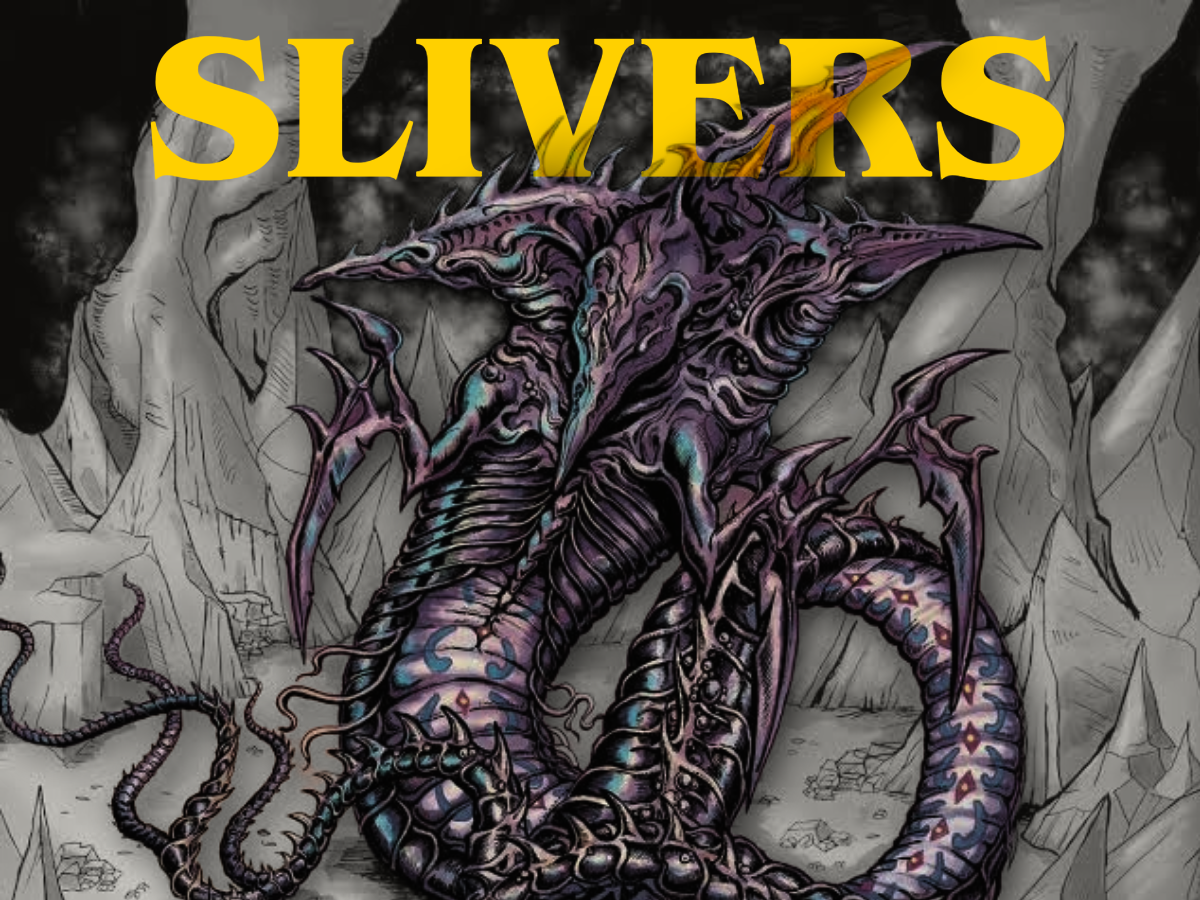
Sliver OverlordSliver Overlord | Art by Justine Jones
One of the few major threats to the Multiverse, Slivers are a hive mind of creatures that all increase one another's strength to destroy their foes. Each individual is a cog in a machine, incrementally strengthening the entire hive mind until nothing can stand against them.
But how do you play Slivers in Commander? What are Slivers' strengths and weaknesses? And how do Slivers win in Commander?
This EDHREC Guide is here to answer all of these questions.
What Are Slivers?
Slivers have been a part of Magic all the way back to Tempest, originally imagined in much the same way as they've been depicted in the years since: a hive mind where each individual contributes toward the greater whole through incremental increases.
Unlike comparable creature types oriented toward amassing benefits across a wide array of creatures, Slivers prioritize keywords. Slivers range from granting evergreen keywords such as haste or flying to granting much more powerful or rare keywords such as indestructible or cascade. Some increase the stats of your Slivers while others provide utility, with each Sliver adding to the amorphous mass of what all your Slivers can accomplish.
Interestingly, early Slivers improved all Slivers on the battlefield. Later Slivers specify Sliver creatures you control. This can lead to quite rare circumstances where two Sliver decks playing against one another may accidentally improve their opponents' Slivers.
Alternatively, they may improve your opponents' Shapeshifters with changeling, which count as all creature types.
Pros and Cons of Playing Slivers in Commander
Greater Than Their Parts
By the nature of Slivers, each individual is weak and contributes to the whole via an effect or keyword. This means that when controlling two Slivers, they provide more value than if you were to control one Sliver, lose it, then control the second.
As such, each Sliver continues to provide more value as your board state increases in size. Playing a lone Sliver when you control eight other Slivers is going to be more valuable than when you control two other Slivers. This allows your growth to continue along the momentum of adding Slivers, snowballing as you get exponentially more powerful.
A Multitool
Slivers are varied across multiple planes, set releases, and time periods of Magic's history, though they always retain that core of Slivers supporting all of your Slivers. This means that they have access as a creature type to a great deal of keywords and abilities based on the design climate at the time of when individual Slivers were released. And because Slivers are rarely released alone, they arrive at scale.
This can manifest as older and antiquated keywords that aren't likely to return en masse in modern releases or simply uncommon keywords that haven't seen much attention. Any creature type can find their way into flying or trample, but what about afflict or replicate? Slivers can even inflict poison counters.
Get The Ball Rolling
Slivers require setup and a firm foundation to build upon. A single Sliver is underwhelming. Two or three may be potent depending on which Slivers they are, but they likely won't win any games. It takes more than a handful of Slivers to properly become a threat, meaning each Sliver lost sets back progress significantly, even in comparison to weaker creatures that would normally be used as fodder.
Sliver tend to be cheap enough that this isn't a significant issue, but it does mean that any targeted removal can dismantle core keywords keeping your battlefield afloat, particularly when targeting Slivers providing protection, given that opens you up to board wipes. Slivers need to maintain a floor of bodies to remain relevant, where falling beneath that floor due to external interference or poor trading in combat will cripple a Sliver deck.
The Best Sliver Commanders
The First SliverThe First Sliver
The First SliverThe First Sliver is a 7/7 with cascade who grants all of your Slivers cascade. When casting a spell with cascade, exile cards from the top of your library until you exile a nonland card lesser mana value than the card cast. You may cast it without paying its mana cost before putting the exiled cards on the bottom of your library.
Cascade on its own is incredibly powerful, but it's a force multiplier for Slivers in particular. By granting all future Slivers cascade, you can cascade into a Sliver that now also has cascade, which would trigger again, continuing the cycle until casting a cheap-enough Sliver that you can't continue. Each of these Slivers pulled out of your library would grant your battlefield its own keyword, rapidly expanding your effectiveness.
Sliver OverlordSliver Overlord
Sliver OverlordSliver Overlord is a 7/7 that allows you to spend to either search your library for a Sliver and put it in your hand or to gain control of a Sliver. The ability to tutor for a Sliver allows you to respond exactly to whatever threat your opponents put before you.
If they have blockers, grab flying or menace. If they have life gain, gain pinging damage. If they run removal, bring out some Slivers providing protection.
The ability to gain control of a Sliver is most useful against Shapeshifters and changelings that count as every creature type, allowing you to permanently gain control of creatures opponents control. While their usefulness is variable, they'll still count as Slivers and thereby be elevated alongside the rest of your board.
Sliver HivelordSliver Hivelord
Sliver HivelordSliver Hivelord is a 5/5 that makes all of your Slivers indestructible. This means they can't be killed by combat damage or destruction effects, targeted or otherwise.
This flatly improves the sustainability of your Slivers to an incredible degree, really only leaving them vulnerable to alternative removal such as exiling, sacrifice effects or -x/-x effects. Unless an opponent does that, your Slivers can block consistently, attack regularly, and allow you to utilize each individual Sliver without fearing the loss of their keyword contribution.
Sliver GravemotherSliver Gravemother
Sliver GravemotherSliver Gravemother is a 6/6 which removes the legend rule from your Slivers, allowing you to control multiple copies of a legendary Sliver. It also has encore and grants encore to each Sliver in your graveyard, where X is that card's mana value. Encore allows you to exile the card from your graveyard to create a copy for each opponent which attacks them that turn if able. The copies are then sacrificed at the beginning of the next end step.
This all comes together to allow you to assemble an enormously painful turn for opponents in which you can return multiple copies of a legendary Sliver to the field. Depending on its effects, this can set up a triple-cascading Sliver casting via The First SliverThe First Sliver or a massive stat spike from Sliver LegionSliver Legion. You can even shut down most interaction in the game by creating a triple-threat of Ward SliverWard Sliver to provide your Slivers protection from three colors.
Rukarumel, BiologistRukarumel, Biologist
Rukarumel, BiologistRukarumel, Biologist is a 3/3 Human Wizard, not a Sliver!
As it enters the battlefield (ETB), you choose a creature type. Slivers and nontoken creatures you control are the chosen type in addition to their other types. It can also tap for to create a 1/1 Sliver creature.
Being able to append another creature type onto your Slivers allows for some odd interactions, such as by using The World TreeThe World Tree to put any number of God cards onto the battlefield. God, being a creature type, means that Rukarumel can allow all of your Slivers to become Gods. Failing that, the ability to create a Sliver for provides a consistent means of getting out another creature empowered by the hive mind to trigger ETB and death triggers.
Sliver QueenSliver Queen
Sliver QueenSliver Queen is a 7/7 which allows you to spend to create a 1/1 Sliver.
This has no limit per turn and can be used as long as you have the mana to do so, leading to as consistent Sliver creation as you want. This can be used for ETB or sacrifice triggers, creating a blocker in a pinch, or to bolster your forces with middling Slivers enhanced by the other Slivers.
Sliver LegionSliver Legion
Sliver LegionSliver Legion is a 7/7 that grants all Slivers +1/+1 for each other Sliver on the battlefield.
With how cheap Slivers can be and how easy it is to get more of them on the field, this scales rapidly. Not only that, but you're already incentivized to maximize how many Slivers you have in order to get their keywords. This can easily lead to a situation where your Slivers outpace even stat-stacking bruisers by volume of bonuses alone. Paired with flying, menace, or trample, this can overwhelm most defenders.
Staples for Sliver Commander Decks
Crypt SliverCrypt Sliver
Crypt SliverCrypt Sliver is a 1/1 that grants all of your Slivers the ability to tap in order to regenerate a Sliver. This allows you to tap any Sliver to prevent another Sliver from being destroyed, be it by combat damage or targeted destruction.
With how many Slivers you'll have, this is an extremely reliable means of preventing your creatures from dying and thereby maintaining your momentum. The number of creatures you'll have reduces the cost of tapping a sliver to regenerate another, keeping it reasonable even with only a few remaining. Just be wary of exiling and return-to-hand effects, as those can't be regenerated.
Hibernation SliverHibernation Sliver
Hibernation SliverHibernation Sliver is a 2/2 that allows you to pay 2 life to return any Sliver to its owner's hand. This is most directly applicable to repeating ETB effects, given there is no limit to how often you can do this aside from the life cost. Any ETB effect that can grant you life reduces that strain, whereas active effects from a Sliver ETB can fire multiple times.
It can also act as a defensive option, returning your Slivers to your hand in the event of them being at risk of being removed from the battlefield anyways. This can be used to remove troublesome Auras or simply to add another card to your hand.
Lavabelly SliverLavabelly Sliver
Lavabelly SliverLavabelly Sliver is a 2/2 that grants all of your Slivers an enters trigger that deals one damage to target player and gains you one life.
Should you have any way to repeatedly trigger ETB effects, this allows for rapid damage as well as sustainable life gain. Even if you don't, it gives each of your Slivers an immediate ping on an opponent before they even contribute to your board state. Slivers already provide excellent value upon ETB, and Lavabelly Sliver just amplifies this.
HivestoneHivestone
HivestoneHivestone appends the Sliver creature type to all creatures you control. This means that they all benefit from the various Sliver abilities your deck is built around.
It's a worthwhile inclusion at only to allow the opportunity to include creature types other than Slivers. This allows you the flexibility to take a creature like Zinnia, Valley's VoiceZinnia, Valley's Voice, which can synergize with Slivers but is itself an odd one out when included in a Sliver deck. The Hivestone provides the ability to take non-Sliver support pieces and have them tag along without being left out.
Kindred DiscoveryKindred Discovery
Kindred DiscoveryKindred Discovery has you choose a creature type as it ETB. Whenever a creature of that type you control enters or attacks, draw a card.
Slivers generally don't struggle with mana, but card draw can be a limiting factor on how many you can get out at a time. With how easy they are to cast, Slivers therefore can benefit incredibly from the ability to draw each time one ETB or attacks. In many cases, they can attack on the same turn they're cast due to one of your Slivers, like Heart SliverHeart Sliver, providing all others haste.
Descendants' PathDescendants' Path
Descendants' PathDescendants' Path allows you to look at the top card of your library during your upkeep. If it's a creature that shares a creature type with a creature you control, you may cast it without paying its mana cost. If you don't, put it on the bottom of your library.
Given that just about every single creature in your library is going to be a Sliver, this provides you with free Sliver casting. This is then enhanced by other Sliver effects that might grant your Slivers cascade or similar on-cast effects. You want Slivers on the board, and this either gets an additional Sliver on the board or thins the top of your library to make that easier.
Mana EchoesMana Echoes
Mana EchoesMana Echoes gives you colorless mana each time a creature ETB equal to the number of creatures you control that share a creature type with that creature.
This solves any mana concerns you might have, since your Slivers are numerous enough to generate significant colorless mana. Certain Slivers do require more colored mana than others, particularly the legendary Slivers that have no generic mana in their costs. But this still allows for incredible cost savings on every other Sliver available, opening up your mana pool for non-Sliver spells.
Mana Echoes also goes infinite with Sliver Queen's activated ability to create Sliver tokens, with each new token from the ability more than paying for the next activation.
For the AncestorsFor the Ancestors
For the AncestorsFor the Ancestors has you choose a creature type and reveal the top six cards of your library. You may reveal any cards of the chosen type and put them in your hand, then the rest on the bottom of your library in any order.
This is a great way to get a handful of Slivers to fill out your hand or to clear out non-Sliver cards from the top of your library. Having flashback allows you to cast this a second time for even more Slivers at later in the game, should you find yourself struggling to fill out your board. It's particularly useful to recover from losing some or all of your Slivers, given it pumps up the options you have available considerably.
Distant MelodyDistant Melody
Distant MelodyDistant Melody has you choose a creature type and draw a card for each permanent you control of that type.
The largest concern you'll have with this is you might draw too many cards, depending on what your battlefield looks like. But as impressive as it is to draw a double-digit number of cards, this is best used for a more moderate board state to push your hand just beyond the seven-card limit.
Patriarch's BiddingPatriarch's Bidding
Patriarch's BiddingPatriarch's Bidding has each player choose a creature type. Then every player returns all creature cards of any chosen type from their graveyard to the battlefield.
You'll name Sliver and get your whole graveyard back at once, with every Sliver that comes back re-granting its ability to the entire board. But be warned: your opponents each get to name a type too, and their choices apply to everyone's graveyards.
Against decks running few creatures or with empty graveyards, this is one of the best late-game spells a Sliver deck can cast. Against another creature-type deck, you'll want to take caution and assess the board state.
Sliver HiveSliver Hive
Sliver HiveSliver Hive can add one mana of any color, but only to cast a Sliver spell. You can also pay and tap to create a 1/1 Sliver, but only if you control a Sliver.
The ability to create mana of any color for Slivers is the star of the show here, granting flexibility across colors. for a single 1/1 Sliver isn't as bad as it sounds, given that 1/1 Sliver will gain all the stat benefits, ETB triggers, and keywords of your other Slivers. A land providing mana of any color in what is often a five-color deck will streamline a lot of turns.
How To Win With Slivers in Commander
Slivers have a very specific way of engaging with the game, which is to build up massive forces over time and crush your opponents. However, they're actually quite flexible in how they do that fairly specific playstyle.
Slivers improve upon one another incrementally, meaning the more Slivers you have, the better off each of your Slivers is. However, you don't actually need to reach the point where you have more Slivers than there are stars in the sky. Even having a single-digit number of Slivers can be enough, depending on what keywords your Slivers have. Removal spells support this, clearing blockers so a handful of Slivers can connect with a devastating strike.
Alternatively, you can fully rush down your opponents with consistent pressure in the early game followed by a late-game swarm. Cheap, disposable Slivers that grant less impactful keywords will still be brought up to a medium power level as they maintain your tempo. Even if they die, all you lose is haste or +1/+1 across your Slivers. Then you can capitalize on the chipped-down life totals to swing big later in the game.
Slivers can provide value in more ways than just direct damage or combat keywords, such as setting up an infinite-damage combo with only Slivers (and a changeling).
If you control Morophon, the BoundlessMorophon, the Boundless and choose Sliver as its affected creature type, all of your Slivers cost less to cast. This makes something like Hibernation SliverHibernation Sliver free to cast.
If you have Lavabelly SliverLavabelly Sliver on the battlefield, each of your Slivers has an ETB that deals one damage to a player and you gain one life. If you also have Syphon SliverSyphon Sliver, your Slivers have lifelink, increasing the life gained from the ETB to two.
This allows you to cast Hibernation SliverHibernation Sliver for free, dealing one damage and gaining two life — one from the life gain trigger, and one extra from the now-lifelinked damage trigger. You then pay two life to return Hibernation SliverHibernation Sliver to your hand, casting it again for free and triggering another ETB again and again until it's interrupted or you win the game.
Another option is to have both Sliver QueenSliver Queen and Basal SliverBasal Sliver on the field, allowing you to both pay to create a Sliver token as well as sacrifice any Sliver for . This ends up being net zero for mana generation, but it allows for repeated ETB triggers, death triggers, and sacrifice triggers. Anything benefitting from that, such as Blood ArtistBlood Artist, can turn it into a win condition.