
Knights in Commander
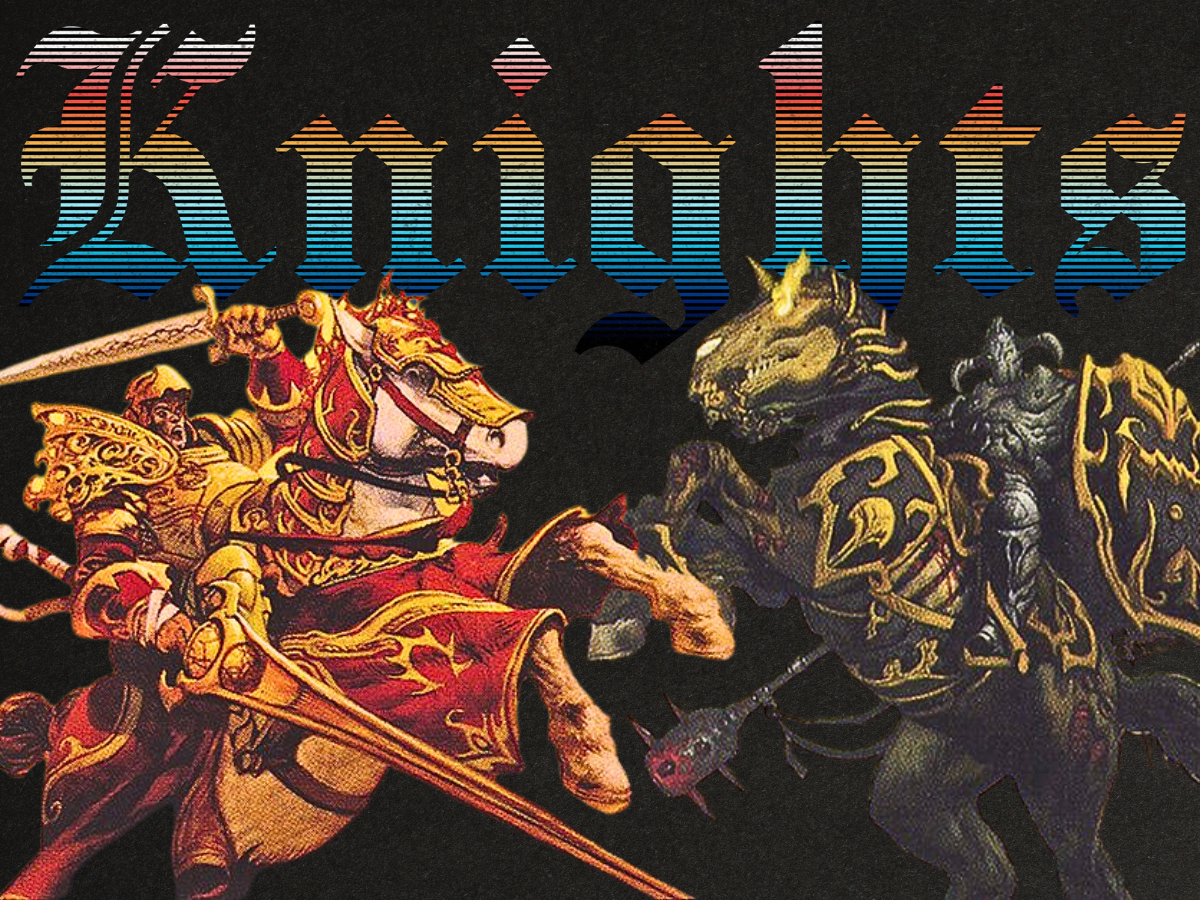
[elWhite Knight[/el] and Black KnightBlack Knight | Art by Christopher Moeller
Knights have existed in various forms across cultures throughout history. Not all of them were blue-blooded vassals of their liege, donning shining armor and riding into battle on horseback. But that's a really cool image, so Magic loves to include creatures that fit that archetype!
But how do Knights play in Commander? What are the strengths and weaknesses of Knights and, more importantly, how do Knights win?
This EDHREC Guide is here to answer all of these questions.
What Are Knights?
Knights in Magic are primarily inspired by western-European depictions of nobles holding the same rank, including references to, and an alignment with, chivalry, nobility, and martial prowess. That being said, they aren't necessarily expected to be heroic, as evidenced by the fact the very first Knights printed were White KnightWhite Knight and Black KnightBlack Knight back in Alpha.
These initial creatures demonstrate where Knights have excelled their entire tenure, that being direct combat applicability and robustness. They regularly feature keywords such as first/double strike, vigilance, protection, or sometimes flying. While most common in , they feature in all colors with a fair few being and .
After the Grand Creature Type Update, Knights were slotted into the "class" component of the class-race hybrid creature typing model. This has led to Knights of various races, species, and ancestries being fielded, though creature types with a strong connection to chivalry such as Humans, Angels, and Vampires see them most commonly. Many Knights also feature a synergy with their associated creature race, usually in the form of providing stat bonuses or creating tokens.
A few antiquated creature types such as Paladins, Cavalry, and Crusaders were combined into Knight during this same update.
Pros and Cons of Playing Knights in Commander
Knights of the Round
Knights excel at creating other Knights and benefiting from having more Knights. On top of that, the tokens they create tend to be 2/2 with some keyword, usually vigilance or haste or first strike. Some branch out into other keywords such as trample, allowing what Knights are created to actually have a good diversity in what they bring to the table.
This can be triggered both by instantaneous effects such as ability triggers and enter-the-battlefield (ETB) or persistent effects such as enchantments or attack triggers. The consistent theme across all of them is the end result of which Knights get created rather than their creation conditions, which helps avoid bottlenecking yourself by not reaching your one specific trigger. You will always have a way to create more Knights.
The Best Offense
Knights most commonly have first strike and vigilance as their keywords, allowing them to act quite defensively despite functioning quite aggressively. Knights aren't a slow-building creature type, they prefer to regularly apply pressure to opponents under cover of winning trades via first strike or acting as blockers after swinging via vigilance. Some even fly, giving you even more incentive to make direct attacks regularly. Others have protection, fully nullifying certain colors.
Paired with their token generation, Knights are very good at avoiding overextending. This allows you to be aggressive or flexible or turtling without ever putting yourself at risk. +1/+1 counters allow you to build strength over time while your keywords incentivize regular attacks, leading to aggression paying dividends.
Auras, Equipment, Modifications
Knights prioritize a select group of effective creatures, most often legendary creatures, attacking alongside a larger force of weaker creatures, likely tokens. This means that you can invest in those handful of legendary creatures and expect legitimate returns, given they are the functional threat to your opponents and will contend with their interference. Your tokens will trade with other chaff or get minor damage in surrounding the main combat.
This means Auras, Equipment, and other modifications are incredibly effective on your Knights, given you only have so many to choose from. You aren't attempting to increase every single token to the same level, you're trying to elevate certain Knights to have multiple stacking keywords and break through the enemy lines. Some Knights have synergies with Equipment in particular, making it cheaper or gaining bonuses by having them equipped.
Interference
Knights traditionally play by the rules, where most of Magic's Knights do the same. They don't regularly force opponents to discard or interfere with their plans. Some have targeted removal of permanents or deal direct damage. Others are such forward-facing threats they demand your opponents to respond to them. But most Knights don't actually interface with your opponents, outside of some fringe exceptions.
This is softened by their protections such as vigilance and first strike and flying. Knights can win most direct confrontations and have the ability to survive long enough to reach that point, though there's nothing stopping you from dealing direct damage to opponents on top of your combats. Your interference with your opponents might not be in disruption, but beating them on combat while striking back each time they interfere with you makes you quite dangerous.
Chump Blocker
Knights may be able to win most of their combats, but that doesn't mean they'll deal damage. Despite the fact they create many tokens, Knights don't actually swarm the board. They still invest in capable Knights to actively build up and prioritize dealing damage. This means that if those prime Knights are prevented from dealing damage, even just by 1/1 blockers, Knights struggle to accommodate this.
This can be circumvented by giving your Knights trample, which some effects do with persistence. You can alternatively prioritize building up your tokens, shifting into a pseudo-swarm build with the various bonuses Knights can apply to all of your other creatures. This has the added benefit of making targeted removal less effective, particularly given your tokens normally come with keywords already.
The Best Knight Commanders
Sidar Jabari of ZhalfirSidar Jabari of Zhalfir
Sidar Jabari of ZhalfirSidar Jabari of Zhalfir is a 4/3 with flying, first strike, and an eminence ability to draw a card and then discard a card when you attack with one or more Knights. Eminence abilities are in effect while this commander is either on the battlefield or in the command zone. Sidar Jabari also allows you to return a Knight from your graveyard to the battlefield each time it deals combat damage to a player.
By itself, Sidar Jabari is an attacker that can confidently deal damage to give you card draw while returning Knights to the battlefield. Its main utility, though, is its eminence feature being active even while in the command zone. Sidar Jabari is most useful being retained in your command zone in order to consistently increase your card draw, being played in response to losing particularly powerful Knights so you can return them to the field. This consistent graveyard retrieval opens you up to playing faster and riskier with your strategies, capitalizing on rapid strikes under cover of first strike, flying, and/or vigilance across your Knights.
Syr Gwyn, Hero of AshvaleSyr Gwyn, Hero of Ashvale
Syr Gwyn, Hero of AshvaleSyr Gwyn, Hero of Ashvale is a 5/5 with vigilance and menace that allows Equipment you control to equip to Knights for . Then, whenever your equipped creatures attack, you draw a card and lose a life.
While quite expensive on its own, Syr Gwyn makes Equipment free for your Knights on top of its other bonuses. This can radically alter the effectiveness of something like EmbercleaveEmbercleave or The Reaver CleaverThe Reaver Cleaver by making it affordable to fit exactly which creature could best use it at the time, or to spread the Equipment around to maximize the number of equipped creatures you have.
Your lifegain from having a commander covering ensures you won't have to be concerned about your equipped creatures attacking too much, effectively converting Syr Gwyn's effect into a free draw. This pairs with the rapid-onslaught of and targeted removal of to allow for incredibly fast-paced attacks.
Kenrith, the Returned KingKenrith, the Returned King
Kenrith, the Returned KingKenrith, the Returned King is a 5/5 who has five activated abilities that each get progressively more expensive, each tied to a different color of mana. For:
All creatures gain trample and haste until end of turn. Knights often have first strike, allowing them to safely hit through defenders without taking damage themselves, even on the turn they're played.
Put a +1/+1 counter on target creature. This is incremental growth that can be used multiple times a turn, leading to you being able to explosively grow any creatures you control if you have the mana.
Target player gains five life. This is a good emergency fallback, as you will always have access to your commander.
Target player draws a card. While quite expensive, it gives card draw with no downside, allowing you to continue working through your deck to set yourself up for future turns.
Put target creature card from a graveyard on the battlefield under its owner's control. This functions as a means to get back on-track from any targeted removal or misplays you may have had, given how expensive the graveyard retrieval is.
Dion, Bahamut's DominantDion, Bahamut's Dominant
Dion, Bahamut's DominantDion, Bahamut's Dominant is a 3/3 who grants your Knights flying on your turn and has an ETB to create a 2/2 Knight. You can also pay to transform it into a 5/5 Saga Dragon with flying which puts +1/+1 counters on your other creatures while granting them flying before destroying a permanent.
Dion allows you to bypass defenders while attacking, relying on its transformation to increase the strength of your other Knights to capitalize off of that. The ideal loop is to play Dion while you already have a cadre of Knights, transform it to increase their strength, destroy a critical component of an opponent's strategy, then transform back into Dion with a new ETB to create an additional Knight. Dion isn't actually the most dangerous creature on the field nor is the strategy reliant around Dion, but it still pushes your other Knights forward and accelerates your other strategies.
The Council of FourThe Council of Four
The Council of FourThe Council of Four is a 0/8, meaning it's a great defender if you don't care about killing attacking creatures. This survivability allows you to sit on its abilities that allow you to draw a card each time a player draws their second card on their turn and allows you to create a 2/2 Knight whenever a player casts their second spell on their turn.
Both of these abilities only proc on the second draw or casting and only on that opponent's turn, but they do specify "a player" and may therefore trigger on yourself. This means you can get a maximum of four cards drawn and four 2/2 Knights created, where you can directly plan around getting at least one and one. Despite the fact the Council has no immediate combat applicability, it will grow your number of Knights substantially, with card draw allowing you to improve them with spells and other Knights that may also make the Council a reasonable threat.
Aryel, Knight of WindgraceAryel, Knight of Windgrace
Aryel, Knight of WindgraceAryel, Knight of Windgrace is a 4/4 with vigilance that can tap for to create a tapped 2/2 Knight with vigilance. It can also tap for alongside X untapped Knights to destroy a creature with power X or less.
Aryel's ability to create Knights isn't very cost effective when compared to other Knight generation methods, but it's consistent if nothing else. The main interesting note is that, with vigilance, you can attack with Aryel and your Knight tokens and only after swinging activate the ability to destroy a target creature. Further, this destroys a creature based on power rather than toughness, allowing you to more easily remove high-toughness threats such as The Council of FourThe Council of Four without needing to whittle them away with damage.
Éowyn, ShieldmaidenÉowyn, Shieldmaiden
Éowyn, ShieldmaidenÉowyn, Shieldmaiden is a 5/4 with first strike. At the beginning of combat on your turn, if another Human entered the battlefield under your control that turn, create two 2/2 Human Knights with trample and Haste. Then you can draw a card if you control six or more Humans.
Given how synergistic Humans and Knights are, you'll be able to play a number of Human Knights to trigger Éowyn and get even more Knight generation. This will then allow you card draw, given that with Éowyn, the two created Knights, and the Human you played to trigger that ability, you're already at four out of six Humans. The only thing Éowyn needs to worry about in order to compliment a Knight deck is the implementation on non-Human Knights such as Angels, Vampires, or Zombies, where her most consistent application requires creating more Humans. This can be circumvented by token generation from your other Knights, as even Angels tend to create Human tokens, but it's something to keep an eye out for.
Haytham KenwayHaytham Kenway
Haytham KenwayHaytham Kenway is a 3/3 with protection from Assassins that grants +2/+2 and protection from Assassins to all of your other Knights. When Haytham Kenway enters the battlefield (ETB), exile up to one creature each player controls until Haytham Kenway leaves the battlefield.
Protection from Assassins is a niche but still-useful ability, given how Assassins tend towards deathtouch and targeted removal. This might give you accidental protection against a useful creature that snuck its way into a deck, but outside of playing against a dedicated Assassins deck it's going to be niche. What's more generally applicable is the ability to exile a creature from each opponent's battlefield, something that's repeatable anytime you return Haytham Kenway from the command zone. Having such a centrally-located nexus of exiling will make Haytham Kenway a regular target for removal, but that then opens you up to cast it again to removal other threats as your strategy evolves.
Staples for Knight Commander Decks
Corpse KnightCorpse Knight
Corpse KnightCorpse Knight is a 2/2 that gives all of your creatures an ETB to cause each opponent to lose one life.
This sort of ping damage starts off "annoying but fair" in most games, given it doesn't target any one player in particular. However, it applies to Knights and the tokens they generate and any amount of graveyard retrieval you might use. The damage will then ramp up and can be a win condition in its own right, though usually functions more as a means to soften an opponent's life total before striking with Knights rather than going for lethal burn damage.
Guardian of FaithGuardian of Faith
Guardian of FaithGuardian of Faith is a 3/2 with flash, vigilance, and an ETB to phase out any other number of creatures you control. Phasing out functionally treats those creatures as if they didn't exist until their controller's next turn, meaning they're unaffected by anything that may have been targeting them.
Phasing out at instant speed is an incredibly potent ability, where Guardian of Faith acts more like an instant in its utility rather than a creature. A 3/2 with vigilance is nice, particularly if you're phasing out to avoid targeted removal over a board wipe. But the main value here is to save any number of creatures you might have at risk, from tokens to Knights to your commander.
Silverwing SquadronSilverwing Squadron
Silverwing SquadronSilverwing Squadron is a creature with flying and vigilance, where its power and toughness are equal to the number of creatures you control. Whenever it attacks, create a number of 2/2 Knight tokens with vigilance equal to the number of opponents you have.
In most cases, given its cost, you will have Silverwing Squadron sitting above a 5/5 when you cast it. Ideally, you'll have a number of other Knights and tokens to increase it upwards of a 10/10, but even if you're struggling you're likely to have it gain decent stats. This then gets enhanced each time it attacks, given it creates Knight tokens upon attacking and therefore grows in power and toughness immediately. The only time Silverwing Squadron isn't worth the cost is if you just recently lost your board and only have a single opponent remaining, otherwise it's a solid choice for most other cases.
The Circle of LoyaltyThe Circle of Loyalty
The Circle of LoyaltyThe Circle of Loyalty reduces its cost by for each Knight you control, down to a minimum of . It grants your creatures +1/+1, creates a 2/2 Knight with vigilance each time you cast a legendary spell, and can tap for to create a 2/2 Knight with vigilance.
This gives you easy access to 3/3 Knights with vigilance, both on-demand with its tapped ability as well as passively following legendary spells. 3/3 is a large enough stat line that it can't be ignored in the same way 1/1 or even 2/2 tokens can be, even more so should you have any additional ways of enhancing your Knights. You can easily get your tokens up to 5/5 with vigilance, with instants pushing that further. The Circle of Loyalty is most useful in its ability to pump out token after token at a slightly increased power floor, with it getting cheaper the stronger your battlefield already is.
EmbercleaveEmbercleave
EmbercleaveEmbercleave has flash and costs less to cast per attacking creature you control, to a minimum of . When it ETB it attaches to a creature automatically and grants them +1/+1, double strike, and trample.
Despite being incredibly powerful in its own right, Embercleave finds more value from Knights due to their numbers and the fact they typically lack trample. Increasing the strength of a single Knight is more impactful than some other creature types, given that they tend to have groups of tokens congregating around central figures that also participate in combat. This gives greater sustainability via double strike, particularly to Knights lacking first strike, as well as increased damage potential from that same keyword. It can be used to overcome a tough blocker or to hit an exposed opponent even harder, potentially confirming the kill if equipped to something like Silverwing SquadronSilverwing Squadron.
Sigiled Sword of ValeronSigiled Sword of Valeron
Sigiled Sword of ValeronSigiled Sword of Valeron can equip to a creature for and gives them +2/+0, vigilance, and makes them a Knight in addition to their other types. Whenever an equipped creature attacks, create a 2/2 Knight with vigilance that's attacking.
Improving one of your Knights while also creating more Knights is a great combination, but the Sigiled Sword also gives you the ability to field Knights without vigilance or non-Knights without harming your synergy. Lacking vigilance is an inconvenience for most Knights, but having it across your entire battlefield will allow you to be more aggressive while integrating non-Knights allows them to benefit from typal effects. Knights also tend to benefit from the number of Knights you control, not necessarily casting them or them ETB, bolstering your other Knight effects.
Chivalric AllianceChivalric Alliance
Chivalric AllianceChivalric Alliance has you draw a card each time you attack with two or more creatures. You may also spend and discard a card to create a 2/2 Knight with vigilance.
So long as you have cards to burn you can continue to do this, giving you a cheap way of filling out your battlefield in the case of needing to populate it with Knights. This is offset by the card draw it gives, allowing you to potentially create multiple Knights to draw an additional card you then discard, though there are often more effective uses of your cards. At minimum, it gives consistent card draw with the back-pocket option to create tokens should you need them.
Virtue of LoyaltyVirtue of Loyalty
Virtue of LoyaltyVirtue of Loyalty normally can be cast as an enchantment that grants each creature you control a +1/+1 counter and untaps them at the beginning of your end step. You may also cast it as an instant to create a 2/2 Knight with vigilance. As an adventure, if you cast it as an instant the spell is exiled but you may still cast it as an enchantment later.
Virtue of Loyalty grants persistent and consistent growth in the form of counters and provides your creatures vigilance in all but name. It's actually superior to granting them vigilance, as this applies to any activated abilities requiring tapping, tapping a creature as part of a spell's listed cost, or overcoming effects that would prevent them from untapping during the normal phase. This has the highest returns should you be able to get it out early and retain creatures it constantly builds off of, but the untapping in your end step also facilitates more aggressive play. It's up to you should you risk your Knights or hold them back to ensure they continue to grow, so long as you actually attack with them eventually.
History of BenaliaHistory of Benalia
History of BenaliaHistory of Benalia is a saga whose first two chapters create a 2/2 Knight with vigilance. Its third and final chapter grants Knights you control +2/+1.
History of Benalia is intended to set up an attack three turns in advance, which is risky given it gives your opponents time to prepare. Assuming you have no external interference, it gives you two 4/3 Knights with vigilance that turn in addition to your other creatures, which can deal enough damage to be worth addressing even in the mid-game. It's not powerful enough to be worth removing ahead of time, but scales in value the more Knights you have given it's a static increase to stats.
Unbreakable FormationUnbreakable Formation
Unbreakable FormationUnbreakable Formation gives your creatures indestructible until end of turn. If you cast it during your main phase, you also put a +1/+1 counter on each of those creatures and grant them vigilance until end of turn.
This is a good panic-button or the setup to a full-frontal attack. Some Knights come with in-built protections, but most lack indestructibility or any proper way to avoid being destroyed outside of combat damage. This allows you to respond to that need should it arise or pre-empt an attack where you grant all of your creatures vigilance, indestructible, and a +1/+1 counter, meaning you have very little to fear over the course of the turn or retribution.
Open the ArmoryOpen the Armory
Open the ArmoryOpen the Armory searches your library for an Aura or Equipment card you then reveal and put into your hand.
Some Knights engage with being modified or equipped in different ways, meaning this is a great way to fetch for something to trigger those abilities. Alternatively, Equipment tends to be quite powerful depending on the equip cost, meaning you can just provide value to your Knights by setting them up with decent gear even if they have no textual synergy. Knights have their best-among-equals, so furthering that enhances the Knight strategy.
Forth Eorlingas!Forth Eorlingas!
Forth Eorlingas!Forth Eorlingas! costs and creates X 2/2 Human Knights tokens with trample and haste. You then become the monarch if one or more creatures you control deal combat damage to a player this turn. As the monarch, you can draw an additional card during your end step, but if any player deals combat damage to you, they then become the monarch.
This can grant you an incredible amount of Knights depending on when you play it, which can act immediately thanks to having haste. Given how atypical trample is across most of your Knights, you can roll through blockers with even a limited degree of stat improvements and even grant them vigilance via your other Knights. Forth Eorlingas! is quite nice as a sorcery in that it not only provides an incredible explosion of token generation, but it also almost guarantees you becoming the monarch, providing card draw. And with how many Knights with vigilance you'll have, you'll quite likely be able to defend that crown well!
Axgard ArmoryAxgard Armory
Axgard ArmoryAxgard Armory can be sacrificed for to search your library for an Aura and/or Equipment card, reveal them, and put them into your hand.
As mentioned above, fetching modifier cards is useful. Axgard Armory allows you to search for up to two cards with a single activation. This is twice as useful as other ways to search for an Aura or Equipment and harder to interfere with, given it's a permanent's activated ability rather than casting a spell. While expensive and costs you a land, it gives you the ability to grab two situationally-useful cards from your library on-demand, something that shouldn't be overlooked in how it can alter the flow of a battle.
How To Win With Knights in Commander
Knights benefit from having a group of a few Knights you invest your resources into, stacking them with +1/+1 counters, keywords, and equipment. Then, you supplement them by having tokens to attack alongside them. These tokens usually have vigilance or haste, giving you consistent defenders or consistent tempo.
You'll want to prioritize creating more tokens so you can then benefit from them, getting out ETBs or increasing the amount of Knights you have access to for X effects. Many Knights give positive feedback loops to create more Knights or otherwise improve what Knights you have, leading to an above-average board presence. However, they usually don't have the scaling to swarm in the same way as some other creature types, meaning these additional tokens should be used as support to your nontoken creatures.
Then you'll want to get out equipment and creatures scaling off them, along with ways to reduce the cost of equipping them. Each individual Knight won't be as useful as the fact they are a Knight with Equipment attached to them, given how easily accessible Knight keywords tend to be. Therefore, allow yourself to trade Knights or make risky plays to open up other avenues of dealing damage, comfortable in the knowledge you can transfer the fallen Knight's Equipment to their fellow. Or, just retrieve them from the graveyard.
A few Knights possess ways of dealing direct damage, often multiple times per turn and affecting every opponent. This means you can reasonably build around Knights who ping opponents for small bits of damage at a time, whether by ETBs or leaving-the-battlefield triggers. This requires a focus on token generation and potentially sacrificing, though Knights find this in no short supply. You can then reasonably even avoid attacking entirely by focusing on defense, using creatures such as Suppressor SkyguardSuppressor Skyguard to expedite the combat between your opponents as well as their downfall.
You can also field a few combos with Knights, such as using Plague of VerminPlague of Vermin to create enough tokens to deal damage via Corpse KnightCorpse Knight and win the game. This requires you to have the ability to spend more life than any other opponent, given Plague gives one token per life spent and Corpse Knight deals one damage per ETB. But any means of increasing this damage can allow you pull it off even at a lower life total, such as with Purphoros, God of the ForgePurphoros, God of the Forge also triggering on those same ETBs.