Top 10 Interesting & Interactive - Duskmourn
 James Cullum
March 14, 2025
What interesting cards from Duskmourn will end up in your next brew?
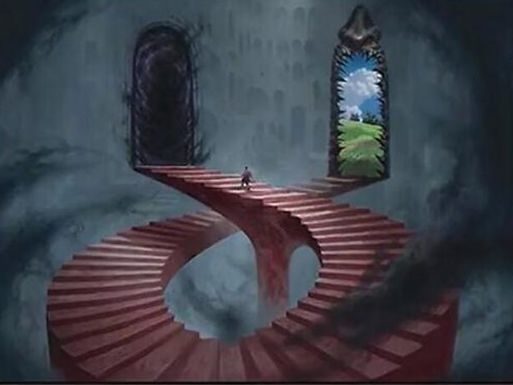
Live or Die| Art by Lorenzo Mastroianni
With no new set releasing in March, I’m taking the opportunity to start a journey backwards through previous sets, pulling out lists of interesting and interactive cards to spice up your multiplayer games.
Today we’re heading to Duskmourn, a set that presented a refreshingly hat-less and deeply intriguing new plane, along with a fantastic and limited environment and some standout mechanics.
The strength of its limited format doesn’t mean that it lacked in commander playable (and commander interesting) cards, however.
As always, I approach this list with the aim of selecting cards that make for interesting and memorable games – where you leave your evening with the warm feeling of having had good and interactive games where things happened.
These cards are not necessarily going to help you win games, and they are not selected to introduce chaos or randomness, but I hope that they will help to inject some interest and interactivity, keeping players engaged with games and perhaps generating new and interesting situations.
Whether or not a card is interesting is subjective, so this is an inescapably biased list, but I hope that it will make for an interesting read, perhaps make you think about a card that has passed you by in the maelstrom of new sets and products, and maybe generate a discussion or two.
Honorable Mention
I am honourably mentioning these two cards to highlight one of the greatest strengths of Duskmourn – the flavor. Twitching Doll may make it into token decks, but Haunted Screen is unlikely to see much commander play outside of something like a screen kindred deck.
However, the skill with which the cards have been designed to represent a black and white television transforming to show color, and a terrifying doll eventually crumbling into its component spiders, is incredible.
Duskmourn went hard on its depth and flavor so I wanted to celebrate that at the top of this list, although I’m sure it will come up again.
#10 – Insidious Fungus
Starting simple – Insidious Fungus is a new hybrid version of things like Caustic Caterpillar and Krosan Wayfarer, and while it does neither thing quite as efficiently as its precursors, it is the flexibility of this card that makes it so potently interactive.
You are able to hold up the necessary 2 mana in anticipation of needing to deal with a problem artifact or enchantment, but if this turns out to not be necessary, why not ramp yourself?
As with all telegraphed removal like this, your opponents will think twice about playing their key permanents while your fungus is insidiously threatening its demise.
Insidious Fungus is therefore simultaneously removal, ramp and a rattlesnake, and I’m not sure we can reasonably ask more for a single mana.
#9 – Nowhere to Run
Nowhere to Run is one of my favorite cards to have emerged from Duskmourn. It is both an instant-speed removal spell and a card that demands continued interactivity while it sits on the battlefield.
Hexproof is by definition an uninteractive keyword, and it can lead to a sense of helplessness that frankly isn’t much fun. Nowhere to Run shuts that down and gives you a sense of confidence in your ability to deal with problems – it even prevents your opponents from giving their creatures hexproof in response to targeted removal, so popular cards like Heroic Intervention, Dawn’s Truce and Veil of Summer become significantly less powerful.
To spend a moment longer on this card, I want to highlight its relevance in the current EDH meta. After a quick browse of EDHREC’s list of the top commanders in the past 2 years, Nowhere to Run’s -3/-3 is sufficient to remove a solid 33% of the top 100 commanders, but an astounding 68% of the top 100 creatures in the last 2 years.
Now, not all of these commanders or creatures will be sitting on board demanding removal, some will simply do their thing on arrival, but I hope it’s clear that -3/-3 is very relevant.
And finally, let’s look at a couple of popular commanders – anyone who has played against a Miirym, Sentinel Wyrm deck knows how painful ward 2 can be.
As the 10th most popular commander from the past two years, if you haven’t already met a Miirym deck the odds are good you will soon.
The same goes for Voja, Jaws of the Conclave, at 46th, Tivit, Seller of Secrets at 66th and Shelob, Child of Ungoliant at 70th.
Then, perhaps less popular than they once were but no less terrifying, we have the commanders like Narset, Enlightened Master and Uril, the Miststalker.
To summarize, Nowhere to Run is removal and protection-denial in a single card, and both sides to it will put in work more often than you might imagine.
#8 – The Jolly Balloon Man
Making token copies of creatures is not a new thing. Red had been doing this for a long time, going back to commanders like Kiki-Jiki, Mirror Breaker and Feldon of the Third Path and continuing through others like Jaxis, the Troublemaker and Orthion, Hero of Lavabrink.
However, white has not had such a prolific history of token copy generation, being limited to things like spirit decks (Hofri Ghostforge) or piles of legendaries (Cadric, Soul Kindler).
Enter The Jolly Balloon Man, your friendly neighbourhood purveyor of joy and floating celebrations. No such limitations will prevent him from creating a lifelike representation of one of your creatures, and now you can include your favorite white creatures as well.
You may have previously needed to blink or flicker your Loran of the Third Path or your Moonshaker Cavalry to double down on their value, but now for a single mana The Jolly Balloon Man will make a happy little 1/1 balloon version of them. Every turn. Perhaps multiple times a turn.
The flexibility of being able to generate token copies of creatures in both red and white can make for a scary deck and a good time for its pilot. Just don’t look too closely at the art.
#7 – Hauntwoods Shrieker
Manifest dread is one of the most flexible and fun mechanics to have been added to the commander toolbox in recent sets. The Jump Scare precon is a menace even out of the box, and the mind games that Zimone, Mystery Unraveler generates when you attack a player with three face down creatures with a humble Evolving Wilds ready to crack are fantastic.
Hauntwoods Shrieker is the essence of this situation distilled into a single card. Even with no other ways to generate face down cards, it provides you with a means to start the manifest dread train rolling, and from that point on just 2 mana represents the potential for a game-changing threat being added to the board.
Who’s to say whether your mysterious 2/2 is a Ponder or a Worldspine Wurm, or for the more fun situations, who’s to say which of your 2/2s is which of those things.
Granted, a 3/3 with no protection or evasion may not have the easiest time in combat, but with a little help, luck or politics it can put in a lot of work and generate some truly exciting situations.
#6 – Live or Die
For the next card we’re back to mechanically fairly simple – Live or Die gives the ability to do two very straightforward things, you may either return a creature from your graveyard to the battlefield or destroy a creature.
I’ll note up top that this costs 5 mana, so it isn’t cheap, but having the ability to reanimate or destroy a creature depending on which of the two suits your current situation better is excellent flexibility, and most importantly Live or Die is an instant.
These days, instant-speed reanimation is rare, or comes loaded with downsides to prevent combat blowouts – see It Doesn’t Add Up or Nurgle’s Conscription.
So Live or Die giving you the ability to bring something back from the graveyard on an opponent’s end step or mid-combat with no downside, while simultaneously giving you the ability to remove something if that suits you better at the time, is noteworthy.
There’s only so many ways I can say the same thing here, it’s a flexible card. We like removal, we like reanimation. And we like doing those things at instant speed. Consider this card!
#5 – Fear of Burning Alive
Duskmourn introduced a cycle of Fears to the game, which ranged from amusing or abstract to downright horrific (looking at you Fear of Lost Teeth). Fear of Burning Alive is the first of two Fears on this list, and it is quite something. At base, it simply does 4 damage to each opponent on entry.
This in itself is not insignificant, that’s a full tenth of each opponent’s life total and 12 damage for 6 mana is fairly respectable. However, let’s assume that you are running this in a deck that will by the time you have 6 mana you are likely to have Delirium online.
In this case Fear of Burning Alive will threaten a grand total of 24 damage. At this point we have gone from respectable to arguably ridiculous, especially since...
a) 12 of this 24 damage can be directed at premium targets on each opponent’s board;
b) this effect is not on cast, it is on entry, so The Jolly Balloon Mans and Zinnia, Valley’s Voices of the world are going to be doing a lot more than 24 damage with this card; and
c) its Delirium effect isn’t limited to its own damage – once it’s on the board any further noncombat damage that you inflict on your opponents will be replicated and enable you to interact with your opponents’ boards in packages of damage however you see fit to deliver them.
Consider popular cards like Boros Charm, Lightning Bolt and Guttersnipe, and how much more powerful they would be if they said to do their damage to a player and also a creature that player controls for the same cost.
Fear of Burning Alive is reasonably expensive mana-wise, but threatens to actually burn your opponents alive if they don’t respect it.
#4 – Fear of Impostors
The second Fear on this list is some kind of horrendous multi-mouthed clown… pirate? Fear of Impostors is a hard counterspell on a stick, and its offer of manifesting dread instead of the spell it targets is almost always going to be significantly worse than whatever you’ve countered.
Against a deck that isn’t set up to take advantage of the potential shenanigans that manifesting dread enables the 2/2 is going to be pretty much the entire downside. Against a creature-heavy or graveyard-focused deck manifesting dread will be more of an upside for your opponent, so pick your targets with that in mind.
This being said, I am a strong proponent of removal with unexpected downsides. Cards like Pongify are strong and predictable, and certainly get the job done, but it’s a rare game where the 3/3 Ape does anything more interesting that chump blocking or being sacrificed to something.
Removal spells like Chaos Warp, Reality Shift or Unwanted Remake give your opponent something unpredictable in return, and these moments can make games hugely more exciting and memorable.
The times that Etali, Primal Storm gets shuffled to the top of the deck again when you try to chaos warp it, or when a Reality Shift manifests a replacement combo piece for the one that you tried to remove, are times that your playgroup will remember.
This kind of gameplay absolutely isn’t for everyone, but for those of you who enjoy moments of chaos in your games, Fear of Impostors joins the ranks of removal with an interesting downside, where your efforts to prevent a spell from resolving can propel the game forward in unexpected ways rather than knocking the momentum back.
#3 – Silent Hallcreeper
Silent Hallcreeper is another example Duskmourn card absolutely dripping with flavor. It’s a 2 mana 1/1 that, depending on the order of your choices, silently (unblockably) draws you a card, grows as a threat, and then reveals itself to be a copy of something much scarier than it perhaps at first appeared.
Whether this becomes a copy of a key utility creature or just a bigger version of your biggest thing, it’s going to impact the game differently every time you play it, and your opponents won’t be able to ignore it for long.
There is a case to be made for creatures that can’t be blocked leading to uninteractive gameplay – things like Silhana Ledgewalker and Invisible Stalker can be loaded up with ciphered spells, auras or mutations and snowball games to an end with a certain inevitability (note: in these cases the hexproof does a lot of heavy lifting, but not being able to block them is certainly frustrating).
So for its first two combats Silent Hallcreeper may also feel somewhat uninteractive, but the hard limit on the number of times it can attack before it becomes another creature goes a long way to mitigating this.
Silent Hallcreeper is a telegraphed threat, it will most likely be simply present and reasonably unthreatening for a couple of turns, but each time it deals combat damage it ticks the clock a turn closer to something scary.
Your opponents will have to respect this, and whether it’s clear what you intend to turn your Hallcreeper into or not they will need to adjust their plans to make sure they’re ready for its arrival.
#2 – Come Back Wrong
Come Back Wrong is a removal spell. You will point it at a creature, and when the dust settles that creature will be in its owner’s graveyard.
However, between the pointing and the dust settling it does a couple of very interesting things. It brings the targeted creature back to the battlefield under your control (importantly, if you are targeting a commander, before its owner can decide to put it into the command zone to recast), leaves it with you for the turn, and then sacrifices it at the end of turn.
This lets you trigger any relevant enters effects, benefit from any abilities during your turn and finally capitalise on any death or leaves triggers. Commander players can’t help themselves but to abuse enters/leaves triggers, and most creatures without one or both of these effects have some kind of a static/activated/triggered ability, so your games will be stacked with tempting targets for Come Back Wrong.
Let’s take another look at the top 100 creatures in the last 2 years. In the top 20 alone you have cards like Eternal Witness, Solemn Simulacrum and Baleful Strix, which will get you excellent value when brought back wrong.
There are many cards like this, which can in some situations allow you to consider Come Back Wrong as a support card, drawing cards or ramping you depending on the decks that you’re facing.
However, considering that you are often going to need to use it as removal to deal with problem creatures, let’s look at some popular threats. Scute Swarm, if not already out of hand on an opponent’s board, will likely leave a copy of itself for you to do silly things with, Etali, Primal Conqueror will give you its ludicrous enters effect and do something ridiculous, and Avenger of Zendikar will leave you with a board of small plants. All the while denying your opponent the having of these things.
The floor of Come Back Wrong is simply that you spend 3 mana and a creature dies, and that’s not too bad at all. But the ceiling is high, and it has a lot of potential for strange and powerful additional effects.
#1 – Ghost Vacuum
I would put decent money on a majority of commander players underestimating the importance of including some amount of graveyard hate in their decks. I don’t mean Farewell, that’s not graveyard hate it’s just hate. But having one or two ways to interact with the gameplan of decks that consider the graveyard to just be an extension of their battlefield is crucial.
You run removal to interact with the cards that players have in play, but there are a lot of decks out there that really don’t care if a creature is destroyed, since it’ll be back again in short order and they may even benefit from its death.
This is why exile-based removal is powerful, so really having a couple of ways to kick a creature out of the graveyard before or even in response to it being recurred or reanimated should be prioritised more than I think it often is.
Previous popular options like Lion Sash, Scavenging Ooze or Soul-Guide Lantern have been either color-limited, one-and-done or indiscriminate, so Ghost Vacuum being colorless, targeted and repeatable is therefore notable.
On top of this, it includes a powerful payoff for later in the game, where for 6 mana you cash it in and return everything that you have so far hoovered up to play under your control as 1/1 fliers, benefiting from any enters effects and onboard abilities going forwards.
Any army of fliers is a threat in its own right, so Ghost Vacuum presents interaction, resource denial, value and a contribution to a win condition in a single card.
I think that you will almost never be sad to have this card in your deck, so give it a try if you aren’t already running it, and consider playing the Ghostbusters theme song every time you activate it, or at least when you release all the Spirits.
Let me know if any of these cards have already made their way into your decks, or if any of them might now! Next month we get to dig into Tarkir: Dragonstorm – now taking bets on how many dragons end up on the list. Thanks for reading!
Read more:
Top 10 Most Played Commander Cards from Duskmourn
Top 10 Game Changer Alternatives